 ChecksCoin
Layer 2 Scaling Explained: Rollups, Sidechains, and the Future of Ethereum
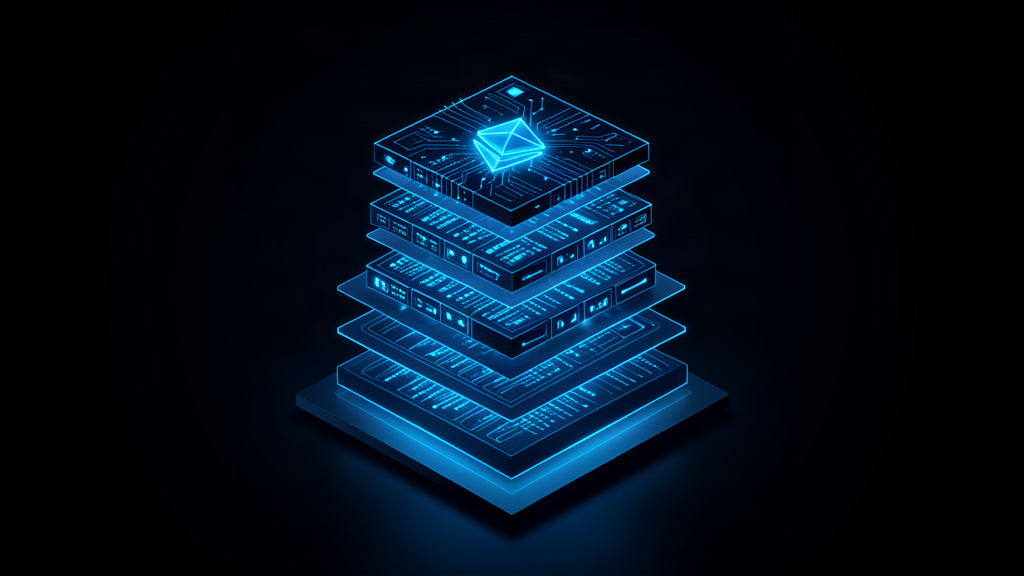
Ethereum's base layer processes roughly 15-30 transactions per second and charges several dollars per transaction during peak demand. For a network that aspires to be the foundation of a new financial system, that is not good enough. Layer 2 scaling is Ethereum's answer, and it is reshaping how the entire ecosystem works.
The scaling problem
Ethereum's design prioritizes security and decentralization over throughput. Every transaction is processed by every validator, which ensures that the network is trustless and censorship-resistant. But it also means that capacity is fundamentally limited by the hardware and bandwidth of the average validator.
Increasing the base layer's capacity would require raising hardware requirements, which would reduce the number of validators who can participate, undermining decentralization. This is the blockchain trilemma: you can optimize for two of security, decentralization, and scalability, but not all three.
Ethereum's solution is to keep the base layer secure and decentralized, and move execution to a second layer that inherits the base layer's security while dramatically increasing throughput.
What is a Layer 2?
A Layer 2 (L2) is a separate blockchain that runs on top of Ethereum (Layer 1). It processes transactions independently, then periodically submits a compressed summary of those transactions to Ethereum for final settlement. The L2 inherits Ethereum's security because the final state is anchored to the L1, but it achieves much higher throughput because most computation happens off-chain.
The key insight is that you do not need every validator to process every transaction. You only need enough validators to verify that the L2's state transitions are valid, and you can rely on Ethereum's consensus to finalize the result.
The two main approaches: rollups
Rollups are the dominant L2 design. They come in two flavors:
Optimistic rollups
Optimistic rollups assume that all transactions are valid by default. They submit transaction data to Ethereum and rely on a challenge period (typically 7 days) during which anyone can submit a fraud proof if they believe a transaction is invalid. If a fraud proof is accepted, the invalid state is reverted.
The advantage is simplicity: the execution environment is identical to Ethereum, so existing smart contracts can be deployed with minimal changes. The disadvantage is the withdrawal delay: users must wait for the challenge period to elapse before withdrawing funds to L1.
Arbitrum and Optimism are the largest optimistic rollups. Together, they process more transactions than Ethereum itself.
ZK rollups
ZK (zero-knowledge) rollups use cryptographic proofs to demonstrate that a batch of transactions is valid. Instead of assuming validity and allowing challenges, they generate a mathematical proof that the state transition is correct, and submit that proof to Ethereum for verification.
The advantage is speed: withdrawals can be processed as soon as the proof is verified, with no challenge period. The disadvantage is complexity: generating ZK proofs requires specialized hardware and software, and the execution environment is more constrained.
zkSync, Starknet, and Scroll are the leading ZK rollups. They are growing rapidly as the technology matures.
Sidechains: a different approach
Sidechains are independent blockchains that are connected to Ethereum through a bridge. Unlike rollups, sidechains do not inherit Ethereum's security; they have their own validator sets and consensus mechanisms. Polygon PoS is the most well-known example.
Sidechains offer high throughput and low fees, but they trade security for performance. If a sidechain's validators are compromised, funds on the sidechain can be lost. This makes sidechains less suitable for high-value applications, though they remain popular for gaming and social applications where the cost of failure is lower.
The trade-offs
Layer 2 scaling involves real trade-offs that users and developers should understand:
- Security vs. throughput. Rollups inherit L1 security but have lower throughput than sidechains. Sidechains have higher throughput but weaker security guarantees.
- Cost vs. latency. L2 transactions are cheaper than L1, but they still cost something. And L1 finality adds latency, particularly for optimistic rollups.
- Composability. Applications on the same L2 can interact seamlessly. Applications on different L2s or L1 require bridging, which adds cost and complexity.
- Liquidity fragmentation. As activity spreads across multiple L2s, liquidity becomes fragmented. This is being addressed by cross-chain protocols, but it remains a challenge.
The user experience today
For users, the L2 experience has improved dramatically. Bridging assets from L1 to L2 is now straightforward, with most major wallets supporting it natively. Transaction fees on L2 are typically a few cents, compared to several dollars on L1. And the range of applications available on L2 has grown to match or exceed L1.
The remaining friction points are: bridging back to L1 (particularly the 7-day delay for optimistic rollups), managing assets across multiple L2s, and understanding which L2 a given application is on. These are being addressed by wallet improvements and cross-chain protocols.
The future: a multi-chain ecosystem
The long-term vision for Ethereum is not a single chain but an ecosystem of interconnected L2s, each optimized for different use cases. High-value DeFi might live on a secure ZK rollup, gaming on a fast sidechain, and social applications on a specialized L2 with custom execution.
This future requires solving several challenges: cross-L2 communication, shared liquidity, and a unified user experience. Projects like the Superchain (Optimism's vision of a network of L2s sharing a common codebase) and cross-chain messaging protocols are working on these problems.
The end state is a world where users interact with applications without needing to know which chain they are on. The complexity of L2s is abstracted away, and Ethereum serves as the settlement and security layer for a vast ecosystem of specialized execution environments.
What this means for you
If you are a user: start using L2s for everyday transactions. The cost savings are significant, and the experience is now mature enough for mainstream use. Keep your long-term holdings on L1 for maximum security.
If you are a developer: build on L2. The user base and liquidity are increasingly on L2, and the tooling is now robust. Choose your L2 based on your application's requirements: optimistic rollups for EVM compatibility, ZK rollups for fast finality, sidechains for maximum throughput.
If you are an investor: L2 tokens represent exposure to the growth of the Ethereum ecosystem. They are higher-risk than ETH itself, but they offer leveraged exposure to Ethereum's scaling success. Evaluate them on fundamentals: usage, revenue, and ecosystem growth.
Layer 2 scaling is not a temporary fix; it is the long-term architecture of Ethereum. Understanding it is essential for anyone participating in the ecosystem, and the sooner you adapt, the better positioned you will be.