 ChecksCoin
Bitcoin Halving Explained: Supply, Scarcity, and What History Actually Shows
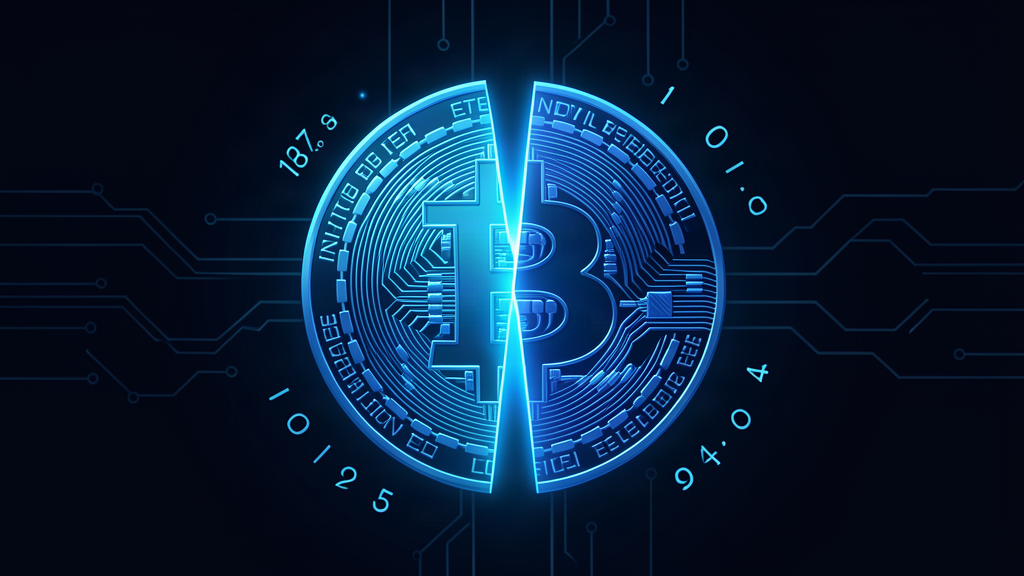
The Bitcoin halving is the most predictable event in crypto and the most overhyped. Every four years, the reward paid to miners for securing the network is cut in half, and the market spends the preceding year speculating about what it means. The reality is more nuanced than either the bulls or the bears admit.
What the halving actually does
Bitcoin's monetary policy is encoded in its protocol. New bitcoins are created as a reward for miners who successfully add a block to the blockchain. This reward, called the block subsidy, started at 50 BTC per block in 2009 and has been halved every 210,000 blocks (roughly every four years) since.
The halving does not change the total supply of Bitcoin. The 21 million cap is fixed. What it changes is the rate of new issuance. After each halving, fewer new bitcoins enter circulation per day. The most recent halving reduced the daily issuance from 900 BTC to 450 BTC.
This is a supply-side change, not a demand-side one. The halving does not create new buyers or increase adoption. It simply reduces the flow of new supply. Whether that translates into price appreciation depends entirely on demand, which the halving does not affect.
The supply dynamics
To understand why the halving matters, you need to understand Bitcoin's supply structure:
- Stock: The total bitcoins in existence, currently around 19.7 million.
- Flow: The new bitcoins created per day, currently 450.
- Stock-to-flow ratio: The ratio of stock to flow, which measures how scarce an asset is. Bitcoin's ratio roughly doubles with each halving.
A high stock-to-flow ratio means that new supply is a small fraction of existing supply. This makes the asset more resistant to inflation and, in theory, more valuable as a store of value. Gold has a high stock-to-flow ratio; fiat currencies have a low one.
Bitcoin's stock-to-flow ratio now exceeds that of gold, making it the scarcest asset by this measure. But scarcity alone does not create value; it must be paired with demand. A scarce asset that nobody wants is worthless.
What history shows
There have been four halvings in Bitcoin's history. Each was followed by a significant price increase, but the timing and magnitude varied:
- 2012 halving: Price rose from ~$12 to ~$1,100 over the following year.
- 2016 halving: Price rose from ~$650 to ~$20,000 over the following 18 months.
- 2020 halving: Price rose from ~$8,500 to ~$69,000 over the following 18 months.
- 2024 halving: Price rose from ~$64,000 to ~$108,000 before correcting.
The pattern is clear but the sample size is tiny. Four data points do not constitute a statistical law. Each halving occurred in a different macro environment, with different levels of institutional adoption and market structure. Attributing the price increases solely to the halving ignores the confounding variables.
What the halving does not do
It is important to be clear about what the halving does not do:
- It does not guarantee price appreciation. Reduced supply growth only matters if demand persists or grows. If demand falls, price falls regardless of the halving.
- It does not immediately affect price. The supply reduction is gradual, not instantaneous. The market has months to absorb the change.
- It does not change Bitcoin's fundamentals. The network's security, adoption, and utility are unaffected by the halving. Only the issuance rate changes.
- It does not make Bitcoin "more scarce" in a meaningful sense. The total supply is unchanged. The rate of new supply decreases, but the stock is the same.
The miner perspective
For miners, the halving is a direct hit to revenue. Their block reward is cut in half overnight, while their costs (electricity, hardware, facilities) remain the same. This forces a shakeout: less efficient miners shut down, and the hash rate temporarily drops before recovering as difficulty adjusts.
The difficulty adjustment is Bitcoin's self-correcting mechanism. Every 2,016 blocks (roughly two weeks), the network adjusts the difficulty of the mining puzzle to maintain a 10-minute block time. If hash rate drops, difficulty drops, making it easier for remaining miners to find blocks. This ensures that the halving does not compromise network security.
Historically, the hash rate has recovered within weeks of each halving, as price increases and efficiency improvements offset the reduced subsidy. The long-term trend is consistently upward, reflecting the growing value of securing the network.
The transaction fee transition
As block subsidies decrease over time, transaction fees become a larger share of miner revenue. Eventually, when the subsidy reaches zero (around 2140), fees will be the only source of miner income. This transition is gradual but important.
The halving accelerates this transition by reducing the subsidy faster. In the short term, this creates pressure on miners. In the long term, it aligns Bitcoin's security model with its usage: the more the network is used, the more secure it is, because higher usage generates more fees.
This is a feature, not a bug. It ensures that Bitcoin's security is ultimately funded by the users who benefit from it, rather than by inflation.
How to think about the halving
The halving is best understood as a scheduled, predictable reduction in supply growth. It is not a catalyst for price appreciation in isolation. It is a factor that, combined with sustained or growing demand, creates upward pressure on price over time.
The most productive way to think about the halving is as a reminder of Bitcoin's monetary policy. Unlike fiat currencies, where the supply can be expanded at will, Bitcoin's supply schedule is fixed and transparent. The halving is the mechanism that enforces this schedule, and it is one of the properties that makes Bitcoin unique as an asset.
Whether the price goes up or down after a halving depends on demand, macro conditions, and market structure. The halving does not change those variables. It simply ensures that, whatever demand exists, it is met with a progressively smaller flow of new supply. Over time, that is a powerful dynamic, but it is not a guarantee of any specific outcome.